Food delivery app
null
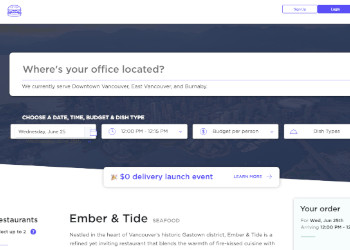
Project Overview
In summer 2019, I was contracted by a startup to develop their food delivery app—a platform designed to combine the convenience of traditional food delivery with catering capabilities for offices and large groups. Built on Rails, the app emulates functionality from popular food delivery platforms while incorporating unique features for bulk ordering.
When I joined the project, a previous developer had created a basic prototype but had left before implementing core functionality. Recognizing both the strong business plan and the opportunity to work on my first production app, I took on the challenge of bringing the concept to full fruition.

Team Structure and Process
Our lean team consisted of three people: the CEO, a graphic designer, and myself as the sole developer. The CEO defined must-haves versus nice-to-haves, collaborating with me to assess technical feasibility for our minimum viable product (MVP). We organized our workflow using Trello boards to track development priorities, with my time estimates for each feature guiding our planning.
The development process followed a structured approach: I focused on backend functionality while the CEO worked with the graphic designer to create layouts for frontend implementation. Weekly meetings ensured we maintained focus and could pivot as needed throughout the development cycle.
Technical Implementation
Payment Processing
From the outset, our priority was implementing order processing and payment functionality. Stripe's API proved ideal for our needs—well-documented and robust enough to handle our requirements with room for growth. The payment flow implementation was surprisingly straightforward thanks to Stripe's solid engineering foundation.
Communication System
A critical requirement was real-time communication between customers, admins, delivery drivers, and restaurants throughout the order lifecycle. While automated email provided necessary documentation, SMS updates through Twilio's API offered the reliability and immediacy we needed.
UX Optimization
Designing SMS templates presented an interesting challenge: maximizing information within character limits while maintaining clarity. For drivers, we prioritized streamlined UX with maximally concise messages and a one-word response system for confirmations and updates to minimize delays.
UI Modernization
During backend QA, we recognized that the existing UI felt dated. This led to a complete frontend redesign to give the app a modern edge, ensuring the user experience matched the robust functionality we'd built.
Reflections
The MVP mindset served us well for rapid deployment, but it also created some blind spots in long-term planning. If I were to approach this project again, I would consider using Electron and React (or similar component-based frameworks) from the beginning, along with a mobile-first design perspective. The logical next step for this type of app would be mobile transition—significant undertaking that would have been easier with different initial architectural decisions. Having never previously architected a full-scale production app, I learned valuable lessons about planning for application evolution beyond the initial launch phase.
The most rewarding aspect was testing the complete user flow after API implementation—witnessing the seamless communication between different code systems working in tandem to create something genuinely useful. There's something deeply satisfying about that orchestration of technologies, like hearing a beautiful symphony where each component plays its part perfectly.